Gala Dinner Themes:
Te Ao Māori Perspectives on Place and Investment
📅 Was held on Thursday 12 November, 2026
⏰ From 5.00pm till late
📍At Crave and Glasshouse, Auckland
Our attendees joined us for our second ever Gala Dinner event: "Whakatipu Tāone: Growing Cities with Mana Whenua”.
It celebrated Urban Development empowered by Iwi Māori Perspectives.
The inaugural Whakatipu Tāone explored relationships, partnership and collaboration between iwi and the urban development sector.
This year's event moved the conversation forward, examining how Te Ao Māori perspectives influence the built environment:
how we understand place,
what we choose to value, and
how we make decisions that shape communities over generations.
Central to the event was the influence of Te Ao Māori perspectives.
How do Te Ao Māori perspectives shape the places we create?
How do they influence the way we define value, assess impact and make investment decisions? and
what can the wider urban development sector learn from perspectives that consider both a broader range of outcomes and much longer time horizons?
The programme itself was designed as a journey through place, time and perspective.
Te Waihorotiu: Where the Journey Began
On the evening of the Gala we gathered as a group at the Wellesley street entrance to the Te Waihorotiu station and walked as a group through the incredible new station.
Beginning here was intentional.
The station takes its name from the historic Waihorotiu Stream, a waterway fundamental to the history of Ngāti Whātua and the origins of Tāmaki Makaurau. Although largely hidden beneath the modern city, the stream remains part of the cultural and physical foundations upon which Auckland was built.
The station itself tells a story. From the Wāhine and Horotiu sculptures to the kauri carvings, the tears of Ranginui represented in the station façade, and the installation recalling the flow of the historic stream beneath the city, Te Waihorotiu demonstrates how indigenous knowledge can shape infrastructure, not simply adorn it.
In many respects the journey begins at the source of the city itself.
Travelling Through Time and Place
From Te Waihorotiu, attendees travelled by way of the newly-opened CRL train through the central city towards Morningside.
The journey provided a physical expression of the event theme. Participants started at the historic waterway that underpins the story of Tāmaki Makaurau and traveled towards neighbourhoods experiencing renewal and regeneration, connecting the city's origins with its future the areas along the transport corridor to the west designed as priority areas for intensified development.
It is a journey through time as much as space, asking how our understanding of the past should influence the development decisions we make today and into tommorrow.
Crave: Community, Connection and Collective Influence through the multi-disciplinary professionals of our sector
The group paused at Crave, a well-known community enterprise in Morningside that embodies the role local enterprise, connection and social purpose play in creating successful places.
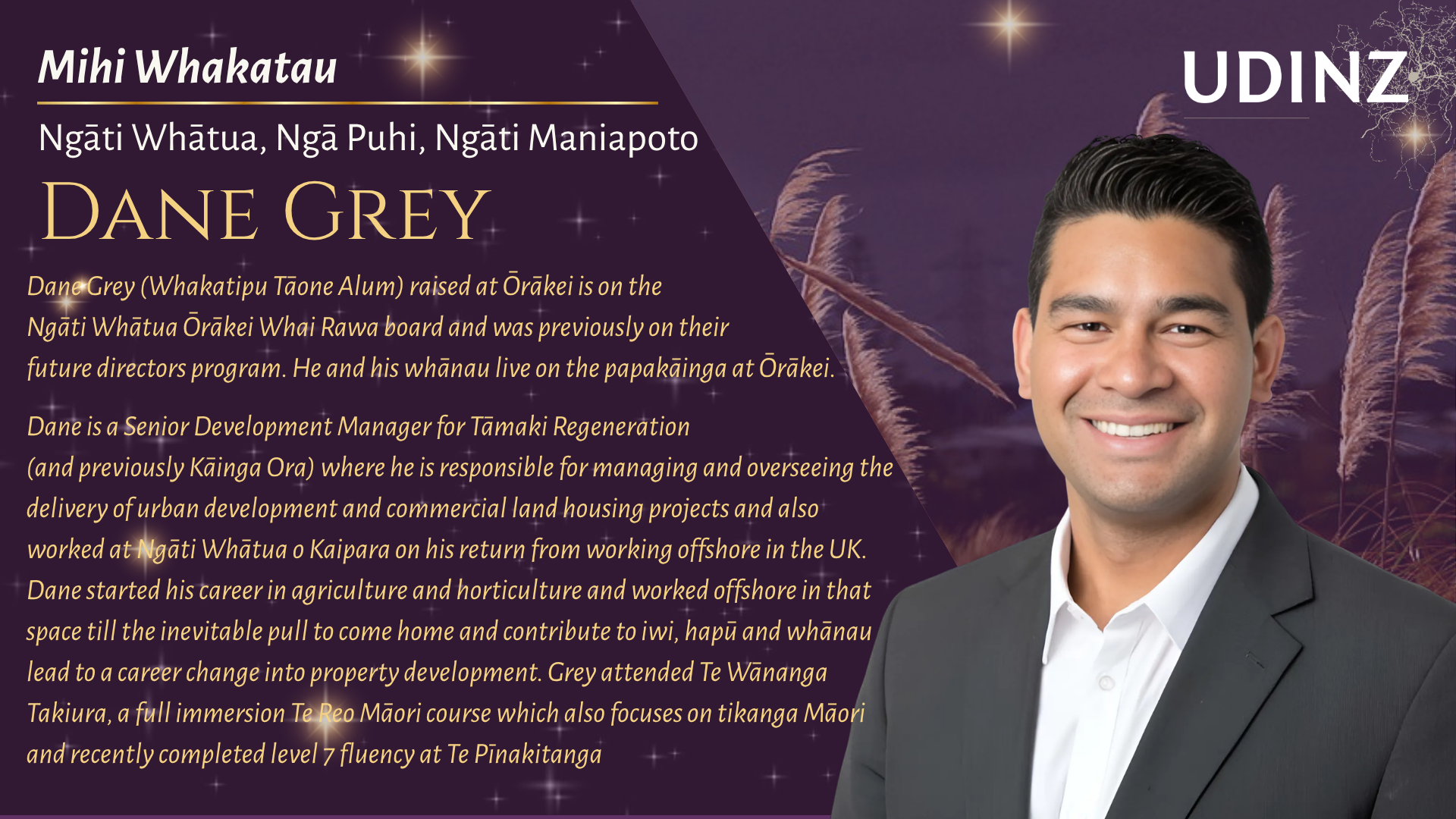
The evening will began with a mihi whakatau led by Dane Grey (Ngāti Whātua, Ngā Puhi, Ngāti Maniapoto), a member of our 2025 Alumni. The mihi whakatau acknowledged those gathered, the significance of the place, and the purpose of the occasion—bringing attendees together, fostering a shared sense of connection, and formally opening the evening. We were delighted to have Dane, a Whakatipu Tāone alum who spoke last year on the panel, join us again this year in this capacity.
After a formal welcome from UDINZ, attendees heared over pre-dinner refreshments, from the first of our speakers
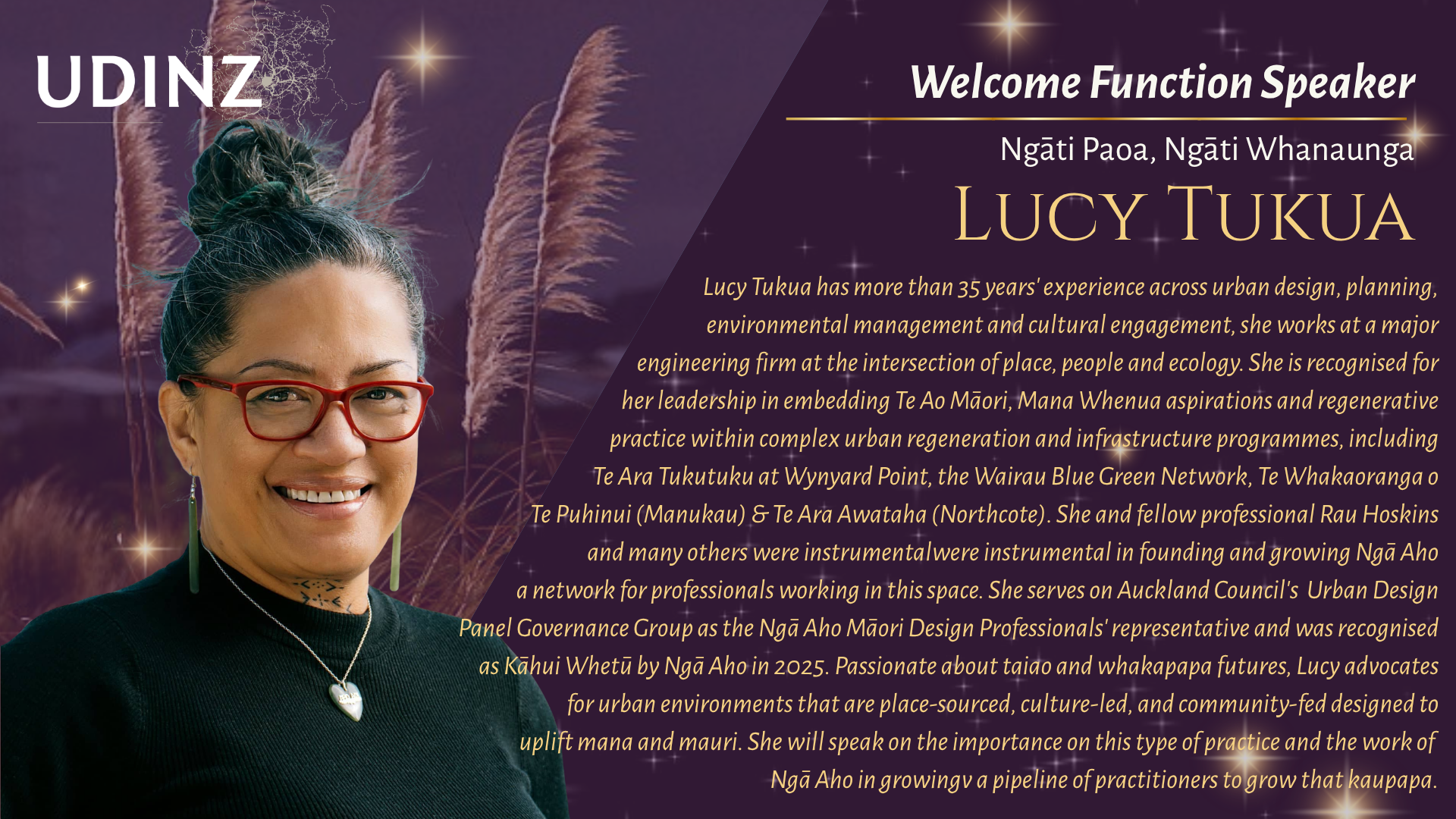
Lucy Tukua (Ngāti Paoa, Ngāti Whanaunga), an influential figure in contemporary Māori architecture, urban design and planning. She, colleague Rau Hoskins and others have spent decades helping to establish and grow Ngā Aho Māori Design Professionals, a national community of practitioners committed to embedding Māori perspectives within the design professions and the development sector. Their work has brought together architects, planners, artists, designers, developers and iwi leaders around a shared ambition: ensuring Māori perspectives help shape not only individual projects, but the systems, institutions and professions responsible for shaping our cities.
This discussion explored how Te Ao Māori perspectives have influenced contemporary design practice across Aotearoa and the collective effort required to create places that genuinely reflect the identity, stories and aspirations of this country.
Dinner Discussion: Iwi Perspectives shaping Investment decisionmaking
We then moved to the dinner venue two doors away, “Glasshouse” where the evening's dinner discussion broadened the conversation from place-making to investment decision-making.
If Te Ao Māori perspectives can influence the places we create and the people responsible for placemaking, how might they also influence the way we define value and make investment decisions?
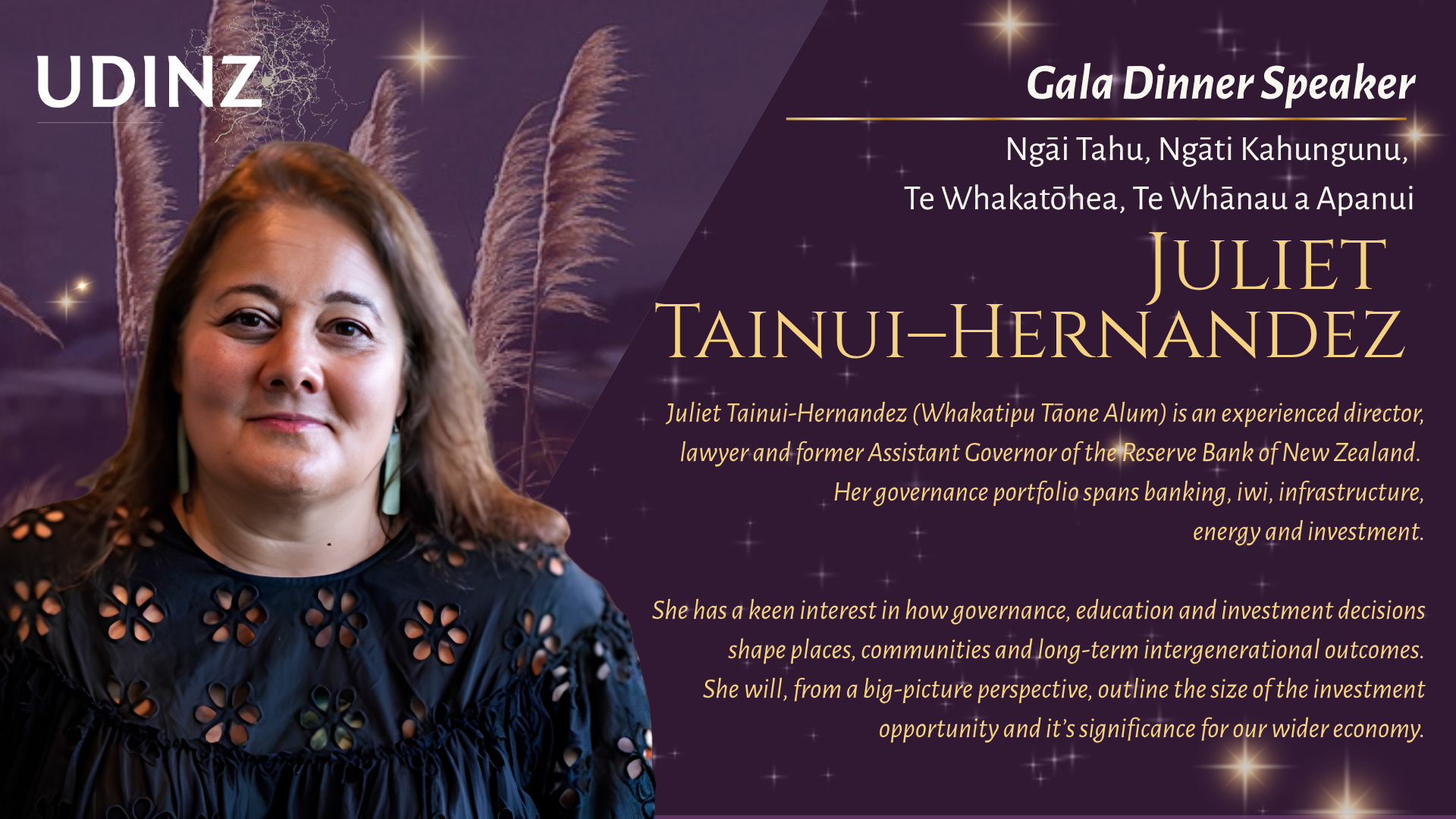
We heard from another of our 2025 Alumni, Juliet Tainui-Hernandez (Ngāi Tahu, Ngāti Kahungunu, Te Whakatōhea, Te Whānau a Apanui) on the “size of the prize” in terms of the significance and scale of iwi investment within our wider economy.
We then heard from iwi leaders from both Te Ika-a-Māui and Te Waipounamu who explored how Māori approaches to investment often differ, not only in the length of the horizon over which success is measured, but also in the breadth of outcomes considered.
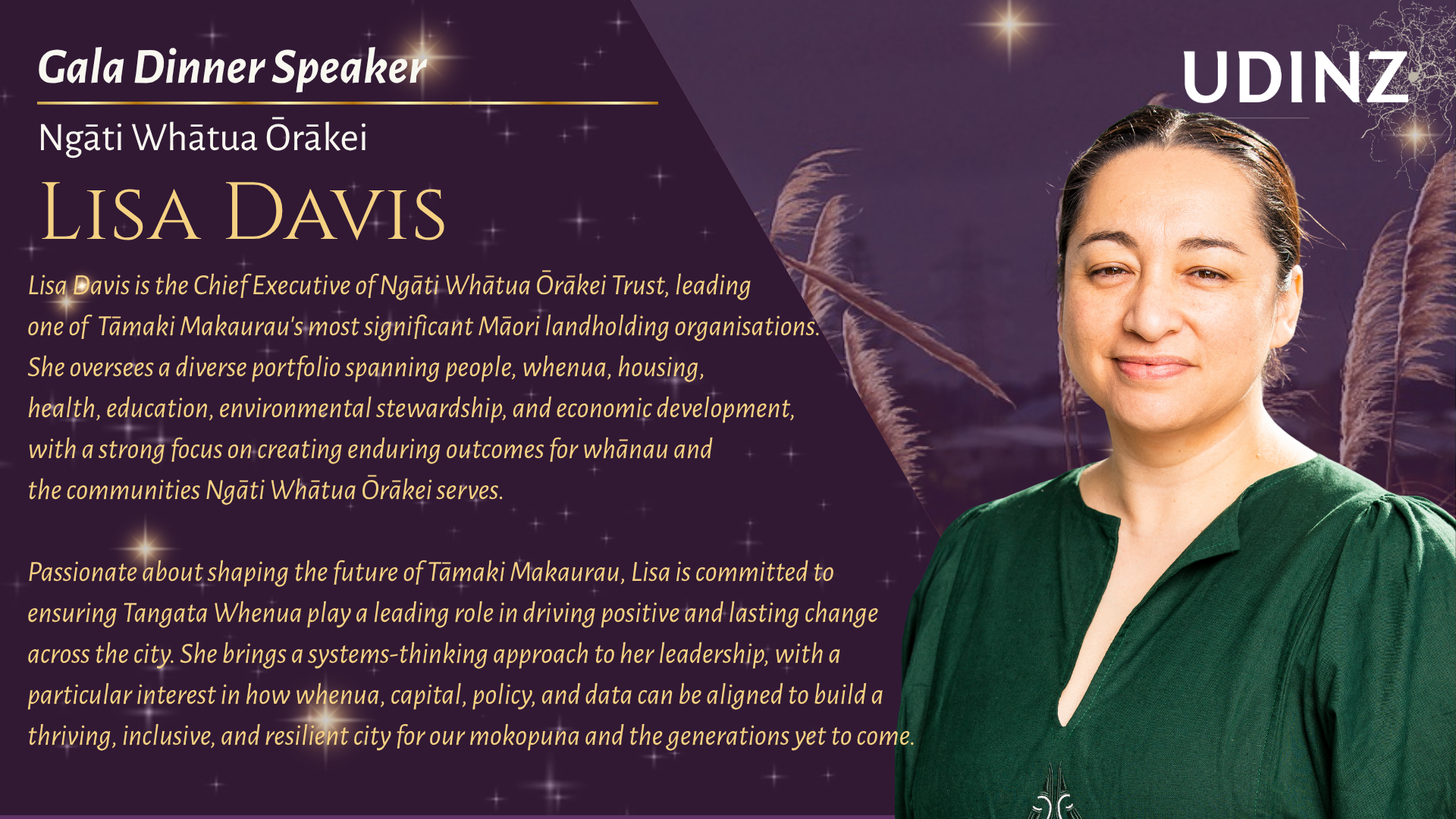
The first of those speakers was Lisa Davis (Ngāti Whātua Ōrākei) who shared her perspectives on place, identity, stewardship and the role of Mana Whenua in shaping the future of Tāmaki Makaurau – a perspective shaped by mokopuna thinking.
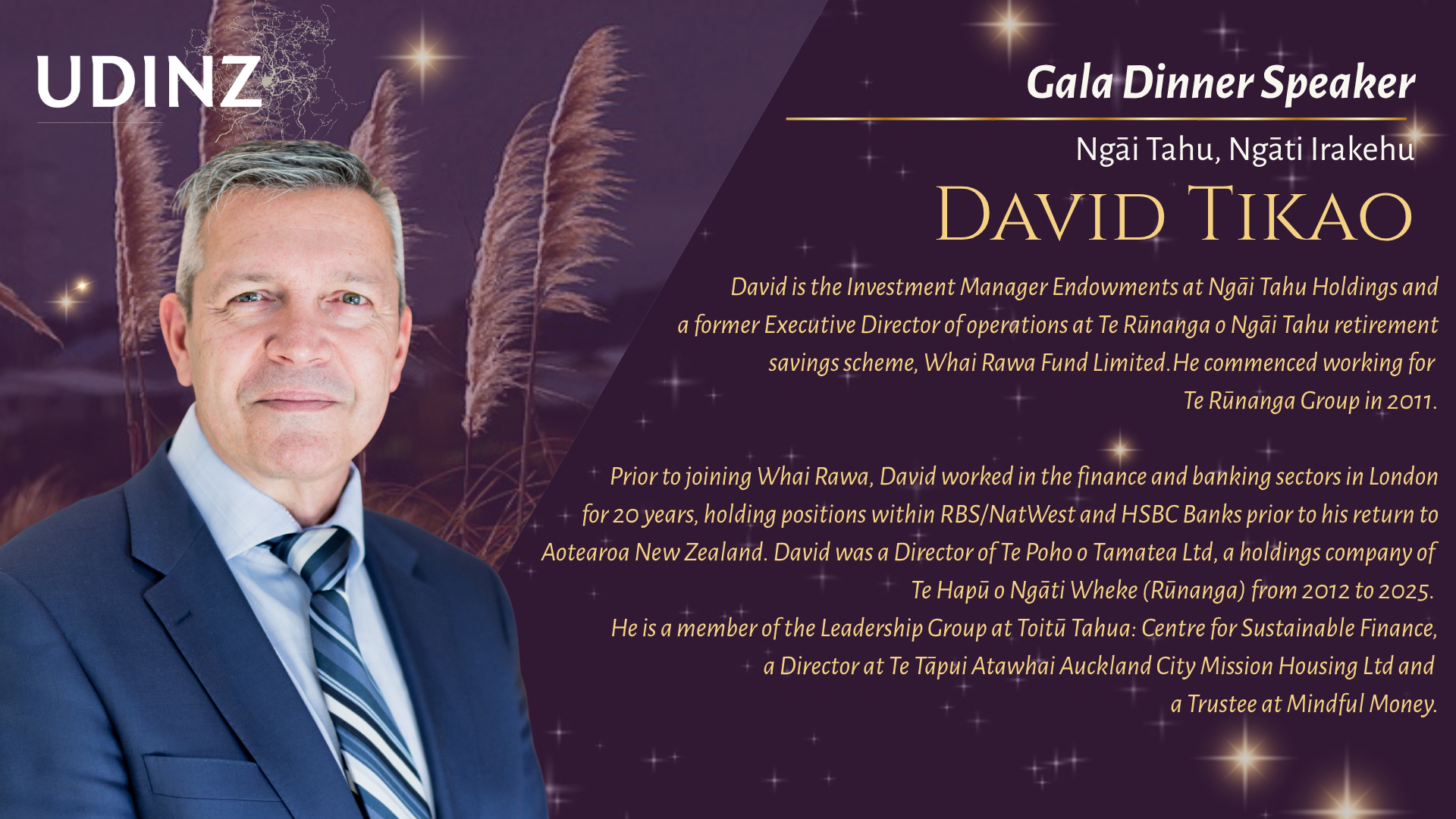
The second of those speakers was David Tikao (Ngāi Tahu, Ngāti Irakehu) who brought a Te Waipounamu perspective to our discussion on investment, exploring how Māori approaches to capital, stewardship and intergenerational responsibility influence outcomes.
The discussion considered how Māori investment frameworks assess success across multiple dimensions, including cultural, environmental, social and economic wellbeing. It examined how decisions change when communities consider not only immediate outcomes but the implications for future generations.
This is not simply about thinking longer term. It is also thinking more broadly about the extend of impact.
The Overarching Question
Whakatipu Tāone 2026 brought together perspectives on place-making and investment through a common lens.
How does a Te Ao Māori perspective shape the places we create, the value we seek, and the legacy we leave for future generations?
From the waters of Te Waihorotiu to the future-focused investment perspectives of Ngāi Tahu and Ngāti Whātua Ōrākei, the event invited the participants to consider how indigenous perspectives can help shape places that are authentically of Aotearoa New Zealand and decisions that endure well beyond our own lifetimes.
| Thank you to our Speakers:
| Thank you to our Sponsors:
With thanks to our fabulous sponsors who are helping us make this happen. If you are interested in future sponsorship opportunities of this sort of partnering with us please email info@udinz.nz.
View our Thought Leadership Article by our Platinum Sponsor Harrison Grierson below.